
Virtuosic talent Jimmy Dunne ’77 AS reflects on the luck that helped shape his life, his “Happy Days” in the entertainment industry, and the inferno that recently incinerated much of his community.
By Dan Knapp
Pedaling through the cataclysmic remains of the Pacific Palisades neighborhood where he and his wife, Catherine, raised their daughters, Jimmy Dunne ’77 AS was haunted by lingering echoes of brighter days.
He remembered Joe, the local barber who had worked from the same storefront for more than half a century, spinning colorful tales as he tended to his loyal clientele. He thought of Susie, the bakery worker at Gelson’s Market, who’d often sneak an extra cookie into his bag, wrecking his diet, much to his wife’s chagrin. He recalled evenings spent sipping potent cocktails on neighbors’ patios, and strolling across the street to his daughter’s home — checking in on their grandson. All those places — those pockets of history and belonging — had been reduced to still-smoldering rubble.
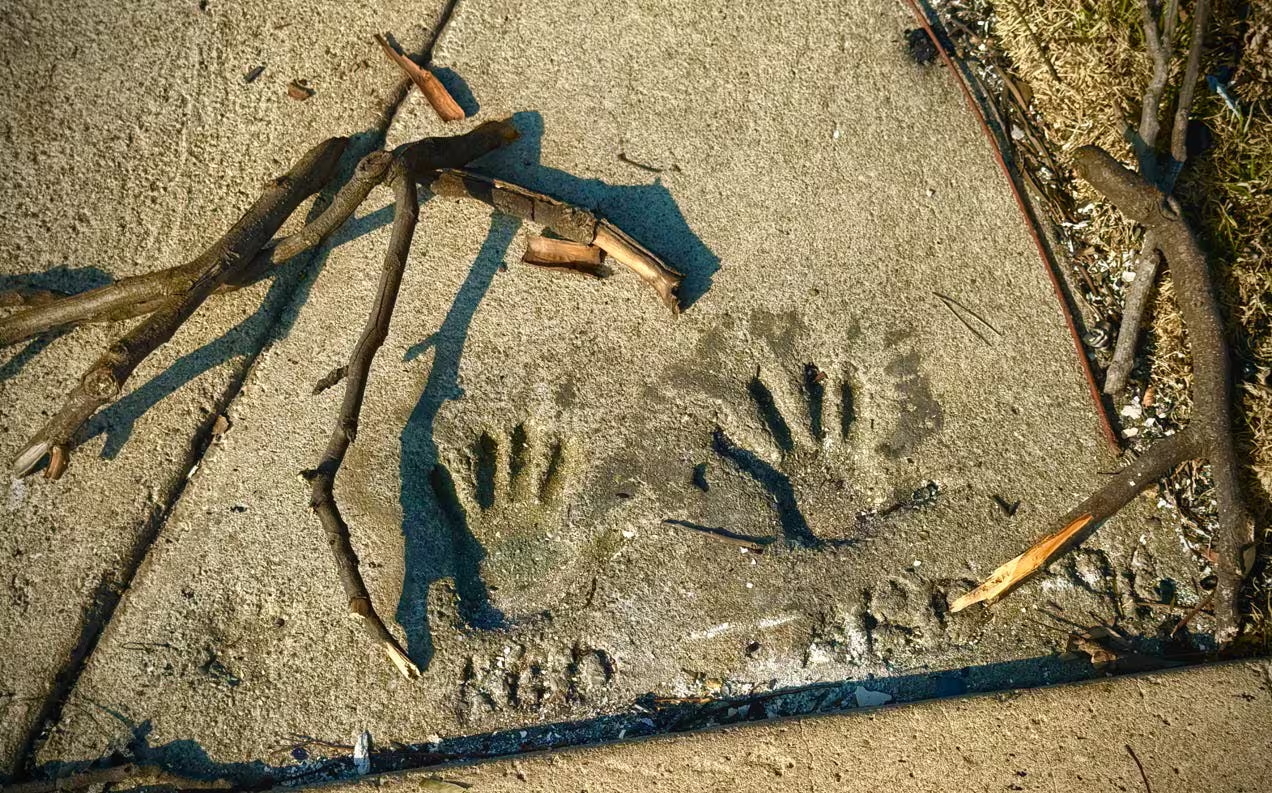
Dunne knew his former home on Bollinger Avenue was also gone. The new owner had already warned him, but that didn’t make seeing it any less traumatic. All that remained of his 37 years in the white, modern Cape Cod home with the scarlet porch bench were memories and a scorched slab of sidewalk with his daughters’ palm prints embedded in the concrete. Seeing the tiny impressions, Dunne dropped to his knees and sobbed.
***

Two months have passed since Los Angeles residents experienced two of the most destructive blazes ever recorded in California: the Palisades and Eaton fires. On a brisk, laid-back early-March morning, sitting at an outside table at The Hive — the usually sun-kissed café mere steps from the Marina Del Rey apartment where he and Catherine have taken refuge — Dunne has had time to process the loss he, his family and friends have experienced.
“It was an eraser,” Dunne says of the January 2025 firestorm that immolated the Southern California tranquility, forcing thousands of families and business owners — including more than a dozen UK alumni — to start over. “It was just like a part of my life…my kids’ life…my wife’s life…was just erased. It was just gone. To ride by friends’ homes was the thing that was just really, really difficult. Schools, churches and homes were just…gone. It was very —”
Dunne stops momentarily to collect his thoughts, his voice tinged with still-raw emotions from witnessing the devastation of what he calls “a remarkable community…just a remarkably wonderful place.”
“It was, emotionally, really difficult, but nothing got me like seeing my daughters’ handprints in front of our house where they grew up,” Dunne confesses. “Still, [my family] was lucky in so many ways.”
SOME GUYS HAVE ALL THE LUCK
“Lucky” is a word that frequently comes up in conversation with the charismatic and avuncular Dunne. It’s not the kind of luck associated with four-leaf clovers, rabbit’s feet or his Gaelic ancestry. Most of Dunne’s luck is simply what happens when chance collides with talent, integrity and old-fashioned hard work. Still, however, as Dunne talks about his life and career — and even the fire — it’s not hard to believe in the fickle hand of fate.
He describes the acrid stench of burning buildings and melting asphalt, tangled in the briny sea air with the pungent, metallic bite rising from the nearby Gelson’s ruins. He says he’s lucky that the condo he and Catherine downsized to in 2021, situated along the iconic Sunset Boulevard, emerged from the maelstrom virtually unscathed when there was nothing but destruction in every direction.
“The pictures of the fire don’t even come close to capturing what it looks like,” Dunne laments. “It’s numbing.”
Still, Dunne says the outpouring of community support has been overwhelming.
“I’d say — and I think I speak for many, many people in the Palisades — there were so many wonderful acts of kindness that happened along this journey, where you see what people are truly made of during something like this,” Dunne says. “It makes you realize you’ve just got to stand up and go forward.”

He says he’s the luckiest guy to have met and married Catherine, an award-winning interior designer, calling her “the world’s greatest mother.”
“As a parent, I do believe how you live and behave is probably, at the end of the day, the most powerful teacher for your kids,” Dunne confides. “And, because of Catherine, my kids have been so blessed. And now I’m seeing those same virtues in my oldest daughter with her two-year-old — it’s the greatest gift.”
The Dunnes will continue living in the marina apartment (which includes his music studio workshop) until next spring, as the city works to clear the vast debris fields contaminated with toxins like lead, cadmium, mercury and asbestos. His new studio is in a complex that had already housed his daughter, Alexis, a Pepperdine University-educated attorney. His other daughter, Kaitlyn, moved into the same complex with her husband, also named Jimmy, and their toddler, Whit, after their home was reduced to ash.
On the way from the café to his studio, Dunne walks with a vitality usually reserved for men decades younger. Still waiting for the morning’s thick marine layer to dissipate and reveal the signature Pacific blue sky, he points to a “silly little seven-mile-per-hour” Duffy rhythmically bobbing in a boat slip — much like the one he and his family have rented, and taken to enjoying in the evening hours since their impromptu displacements. The Dunne family is like many others working to get back to a semblance of normality while buoying each other’s spirits.
“Turning lemons into lemonade,” as Dunne says, he and a Palisades pal secured the Duffy to scoot around the harbor for his family and for fellow Palisadians.
“A couple hundred Palisadians have taken a spin on the ‘Palisades Duffy,’” said Dunne, with his seemingly ever-present beaming Irish smile. “It’s like therapy. You get out in that water, and you say things you maybe never admitted to yourself or to anyone before. You come back to the dock with a snap in your step.”
He says he’s been lucky in his career to allow him and his family to live in the tight-knit, upscale beachfront community. Luck may have had something to do with it, but talent and persistence played their roles as well.
BEGINNER’S LUCK
The second of seven children in a quintessentially Midwestern Irish-Catholic family, Dunne spontaneously discovered his aptitude for music in the second grade. It was 1962, and his parents loaded the brood into the family station wagon to see the epic John Wayne film “How the West Was Won.” Upon returning home, Dunne sat at their Baldwin piano and played the film’s theme from memory.
Astonished, his mother, Joanie, wondered how the 7-year-old managed without ever having played before. Dunne says he remembers thinking it wasn’t a big deal, telling his mother with childlike logic, “All the notes are lined up in a row.”
Like his grandfather, Dunne was blessed with the innate ability to play by ear.
“For me, music and math were interchangeable,” Dunne explains. “Music was just creative math. You think in terms of the numbers, so it’s ‘the one, to the four, to the two-minor’ — you just play the math. It’s a little math quiz.”
“As a kid, the joy of playing the piano wasn’t about hearing that clunky, out-of-tune piano,” adds Dunne. “It allowed me to imagine an orchestra behind the piano.”
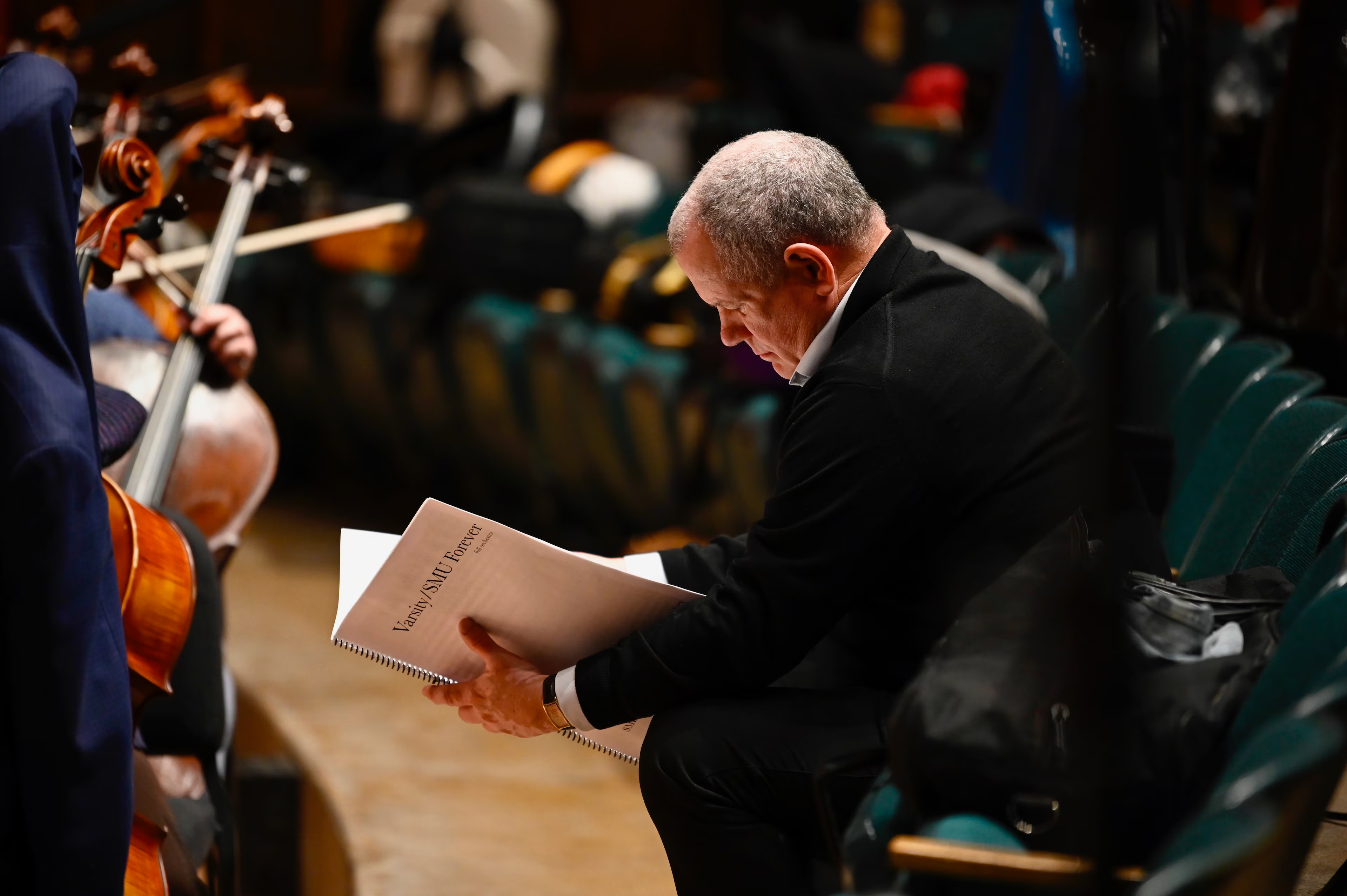
Encouraging her prodigious son, Joanie enrolled him in music lessons. Although formal training with Sister Ethna Marie, his acerbic piano instructor, did not work out as hoped — due to nerves coupled with a weak bladder, Dunne jokes — he was undeterred and harnessed his mathematical understanding of the basics of music. His competitive side helped him become an accomplished pianist at an early age.
While his doting mother encouraged his musical pursuits, Dunne points to his father as stoking his competitive nature when he was young.
“You’d walk out of the house and he’d kind of give you a whack on the back of your head and say, ‘Don’t forget to be a Dunne,’” the award-winning composer and pianist recalls. “It was kind of a sense of ‘Be proud of yourself and remember your heritage.’ My father was strong. He was the lion. Everything was competitive. Being an altar boy was competitive! It was a sporting event.”
“On the other side of that was a mother who was so dear,” Dunne continues. “She’d walk out to my bike, kiss me on the top of my head, and say, ‘Be kind.’ They were two sides of the coin: a mom who gave me a heart, and a dad who put a fire in my belly.”
Dunne says their church also played a monumental role in his musical development.
“We didn’t grow up in a town,” Dunne philosophizes. “I was raised in LaGrange, Illinois, but I grew up in the parish.”
At St. Francis Xavier, Dunne grew more confident in his abilities.
“The Catholic Church taught me how to play the piano,” Dunne says. “In seventh grade, I had keys to the big organ on the balcony at the back of the church. I’d go there and play at night when no one was around. Try that alone in a church with the lights out and a bunch of big statues behind your back.”
Dunne smiles and explains. “The music of the Catholic Church is sort of like campfire music. It’s simple — they’re melodies meant to be sung along with. The chords of Catholic music gave me a lifelong musical foundation.”
Dunne continued to hone his craft as a teen while following other interests, like writing feature stories for his high school’s award-winning school paper. Expressing his competitive nature, he was his tennis team’s MVP, and the class president in his high school of 5,700 students — one of the largest schools in the country.
LUCK OF THE DRAW
Upon graduation and with his mother’s encouragement, Dunne opted to attend the University of Kentucky due, in part, to the journalism program’s solid reputation. He quickly immersed himself in a variety of academic and social pursuits, including feature writing for the “Kentucky Kernel,” where he tackled important stories from a college student’s perspective.
“A guy down the dorm hallway, Joe Gran Clark (who became one of his dearest lifelong friends), was the smartest guy I ever met. He drew me into the art of learning,” Dunne vividly remembers. “After a year of good grades, I was lucky enough to get into the [Lewis] Honors College —opening the gates to taking any class, at any level, I wanted. Lucky me!”
In addition to his journalism courses, which sharpened his writing and critical thinking skills, Dunne explored a broad spectrum of subjects — music, science, communications and business — that would later prove integral to his success.
“The beauty to me of college — and I think the shocker which nobody seems to talk about before you get to college — is the freedom,” Dunne says. “Freedom can either be the biggest curse or the greatest blessing. It was a once-in-a-lifetime opportunity to explore a smorgasbord of fields.”
Dunne says that while his unusually heavy courseload (one semester, he took 29 units) prepared him academically, he also received an education about life at UK. He cites a particularly influential faculty member whose advice still resonates nearly 50 years later.
“There was a teacher named Tony Adams, he was a business teacher,” Dunne recalls. “He used to say he never wore the same outfit to class because, he said, it empowered him to reinvent himself every day. He was anything but a business teacher to me — he was a life coach.”
While attending UK, Dunne recorded a couple of solo piano albums and performed at local venues and throughout the Midwest, learning more about the music business along the way. As a junior, he formed a successful music agency, Dunne Productions, that booked bands for campus and Greek events.
His performative nature also allowed him to set a world record for “juggling balls for the longest consecutive time” while standing in the middle of the now-shuttered Lexington Mall on Richmond Road in a fundraiser for the Muscular Dystrophy Foundation. (His record, 10 hours and 45 minutes, was listed in the Guinness Book of World Records for three years until it was toppled by someone who juggled three minutes longer.)
Playing on Kentucky’s tennis team, he says, “I was barely hanging on to be on the team, but it afforded me something else. Tennis was booming. In the Chicago suburbs, if you owned a pair of tennis shorts, they’d let you teach.”
During his college summers, Dunne quickly rose up the ladder to become the head tennis professional at a few prominent suburban country clubs. In his junior year, he founded the West Suburban Tennis Conference, which recently celebrated its 50th reunion — which has had generations of families competing over the decades.
After graduating Phi Beta Kappa with a 3.9 GPA, and with double topical majors in journalism and business, and double minors in advertising and music, Dunne headed west to see what opportunities awaited in the City of Angels.

LUCKY BREAK
Within a few months of his arrival, Dunne was on the Paramount Studios lot, attempting to secure his first Hollywood job. The father of a kid who Dunne gave tennis lessons lined up an interview with legendary producer, director and writer Garry Marshall; the creative force behind television shows like “Happy Days,” “Laverne & Shirley” and “The Odd Couple.”
Dunne remembers the interview lasting “all of about 30 seconds.”
“I walked into his office, and he was putting a picture of his new tennis court on this armoire thing behind his desk next to photos of all these celebrities,” Dunne recalls. “He said, ‘I’ve got no life. All I do is produce these shows all day long. I’m never going to play tennis. I don’t know why I built this court.’ I knew I had no prayer of getting a job.”
Walking out, a “kid…with a face full of pimples” made a snarky comment about Dunne’s three-piece suit on that particularly hot day. Out of spite, Dunne turned on his heels and trotted back into Marshall’s office.
“I said, ‘Excuse me, but you said you didn’t have a life. I think I have something that nobody on the Paramount lot can give you,’” Dunne recalls saying. “Annoyed, but fascinated with my spunk, he asked, ‘And what would that be?’”
Dunne said, “I’ll meet you Saturday at 10 at your house. I’ll give you a 55-minute tennis lesson, and you’ll give me a five-minute writing lesson.”
“He got up from behind his desk, came over and said, ‘You’ve got a deal,’” Dunne laughs.
While Dunne helped the Hollywood heavyweight improve his backhand, Marshall gave him invaluable lessons on story development and narrative arc. Dunne characterizes the mentorship as “the gift of a lifetime.”
Soon after, Marshall offered Dunne a job as a “gopher” on the “Happy Days” set, affording Dunne the chance to learn the entertainment business from the ground up.
“He said, ‘I’m going to give you the lousiest job I can give you, but I’m also giving you keys to the studio,” Dunne says. “He said, ‘With these keys, you’ll be able to walk in any door. But it’s only going to get you in the door.’ He said, ‘It’s not about getting in the door; it’s what you do when you get in there.’”
With his access, Dunne soaked up the various aspects of entertainment production. He watched sound engineers work their magic and editors shape films and TV shows. He’d go from set to set and watch how shows like “Cheers” and “Bosom Buddies” and films like “Saturday Night Fever” were made. He sat in the back of the room of writing tables, met with studio heads and studied music scoring and mixing on Paramount’s “Studio M.” Dunne soon was entrusted with more critical aspects of the production beyond running errands.
By the end of Dunne’s first season on “Happy Days” as a 22-year-old, he got the nod to write his first episode.
“Potsie Quits School” was a big success, as was the original song he wrote for the episode. The song, “Pumps Your Blood,” went on to become the American Heart Association song, the focus of an award-winning advertising campaign for St. Joseph’s Bayer aspirin, and, decades later, a viral sensation on YouTube.
More scripts and songs followed, and Dunne was the associate producer on “Happy Days” and, in 1982, a writer and producer on the spin-off, “Joanie Loves Chachi.” Dunne was the youngest producer in Paramount’s history.
He adapted a melody that he had written for his mother when he was in the eighth grade, “You Look at Me,” to become the series’ theme song.
“Happy Days” became the catalyst for writing theme songs and songs for hit television series and films all over town.
“Jimmy Dunne has no off switch; he has many rare talents hidden behind a Mr. Magoo persona,” jokes actor Ted McGinley, who starred on “Happy Days” as Roger Phillips during its last four seasons. “He never stops thinking about how to make things better, not just for himself, but for others as well. If success is measured by how many people love and respect you, Jimmy Dunne is a rich man.”
Dunne and McGinley shared a rented home in the Hollywood Hills owned by American playwright George Firth.
Around this time, as Dunne drove from Hollywood to Malibu to celebrate the Fourth of July, he fell in love with Pacific Palisades — drawn to its hometown feel and the sight of “zillions” of kids filling the streets.
“Jimmy came from the wonderful “town” of La Grange, Illinois, and he has spent the rest of his life trying to get that feeling back of what it means to belong to a ‘town,’” explains McGinley, who now stars on the critically-lauded Apple TV+ show, “Shrinking.” “A real town…where old people can walk the streets safely, side-by-side with young kids as they ride their bikes or get pushed in strollers. Where people know each other and wave to each other and say hi. Where they have Fourth of July parades and 5K runs and firework shows and on occasion… to Jimmy Dunne’s music in the background.”
Dunne bought a home there, imagining it was where he would one day raise a family.

LUCKY DAY(TIME DRAMA)
Still in his mid-twenties, Dunne wasn’t content to settle on a single career path. Instead, he dove headfirst into several disparate creative avenues.
“Early on in life, I knew I wanted to have an eclectic life. I was enjoying spinning a number of plates as a songwriter, producing shows, and producing music for a lot of different shows,” Dunne says. “I was writing screenplays for different studios such as Disney, Touchstone, Paramount and Universal. I wanted the joy of experiencing different ways to tell a story; whether it was through music, or with writing a script, or in the world of business.”
Dunne’s songs also found their way into national advertising campaigns, theatrical musicals and soap operas.
On CBS’s popular daytime drama “As the World Turns” in 1983, the producers tapped Dunne for a wedding song for their big upcoming wedding with soon-to-be-superstar Meg Ryan — the second-most-watched broadcast in daytime history.
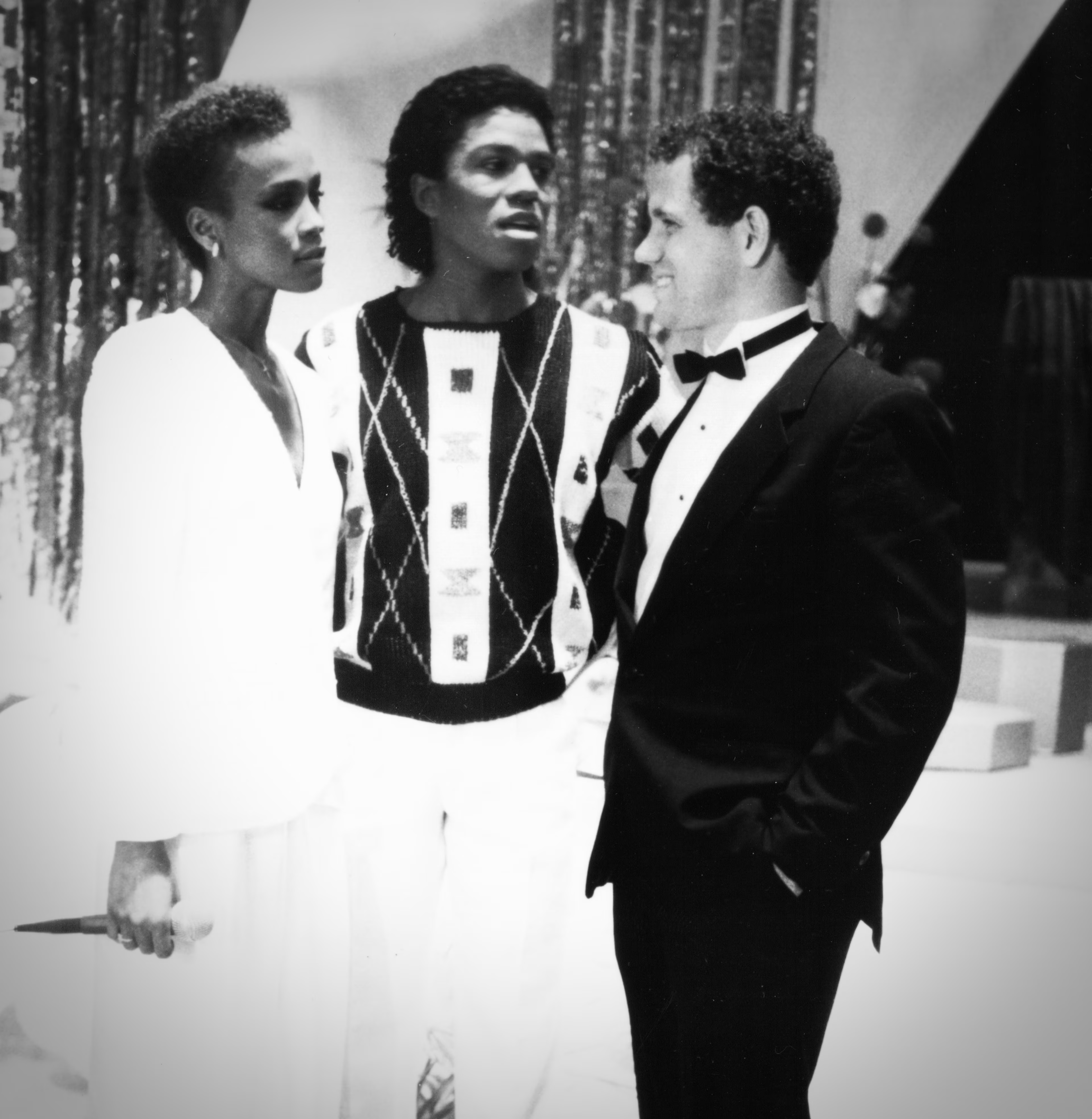
The song, “Nobody Loves Me Like You Do,” soon became a #1 hit duet for Country crooners Anne Murray and Dave Loggins. Jermaine Jackson and a then-unknown Whitney Houston also recorded the song for Houston’s 1985 debut album, “Whitney Houston,” and the duo appeared on the soap opera alongside Dunne to perform it.
The Country standard has won many industry awards, including a CMA Award, BMI Awards, a Grammy nomination and Juno’s “Song of the Year.”
As a well-regarded, in-demand composer, Dunne wrote songs for many of America’s most beloved soap opera couples, with character themes on “General Hospital,” “The Young and the Restless,” “Days of our Lives” and “The Bold and the Beautiful.” The Emmy nominee “The Change in Me Is You” that Dunne wrote for “Santa Barbara” — with its eight crystalline, almost haunting, opening notes — appeared on the soap hundreds of times as a love theme for the show’s supercouple, Cruz and Eden, and remains one of the genre’s most enduring songs.
“The canvas of soap operas has always fascinated me because of the unique relationship viewers would have with its characters,” Dunne reveals. “Seven million fans know these characters intimately — songs have the opportunity to emotionally capture these relationships.”
Other high-profile opportunities allowed Dunne to have his work recorded by the likes of Janet Jackson, Take 6, Loverboy and Kenny Rogers. Rogers’ recording of “When You Put Your Heart in It” became an award-winning top 10 hit and was the Official Olympics song for the 1992 U.S. gymnastics team.
Dunne reunited with Marshall on a number of movies, including “Princess Diaries,” “Nothing in Common” and, perhaps most notably, “Pretty Woman.” (Dunne can be seen as the piano player in a pivotal lounge scene performing a song he composed as Richard Gere’s and Julia Roberts’ characters prepare to go to dinner.) Dunne’s music has appeared in more than 1,400 TV and film productions.
As the ’90s rolled on, Dunne — who has amassed more than 75 gold and platinum records from around the world — expanded into other business ventures, working in the dot.com arena and started a creative services agency for leading corporate businesses.
In 2001, he founded Inspire, a music and branding firm with clients like Whole Foods, Staples, Visa, American Greetings and FAO Schwarz. Dunne has penned alma maters, fight songs and anthems for universities and high schools that have touched his life along the way, including Southern Methodist University, University of California-Merced, Pepperdine and Claremont, among others.
“Along life’s journey, a music niche I’ve always been fascinated with is songs for universities,” says Dunne. “Great ones live forever, tapping into the essence of a special moment in people’s lives.”
LUCKY NUMBER SEVEN(TY)
As he prepares to celebrate his milestone 70th birthday this summer, Dunne shows no signs of slowing down. He recently authored two books: “The Shepherd’s Story” (Loyola Press), a variation on the traditional Christmas story told from the shepherd’s perspective and written for children. The book has won numerous accolades, including ones from the Illumination Book Awards and the International Book Awards; McGinley and his wife, Gigi Rice, recorded a reading of the book for the publisher.
A new book, “Jimmy Dunne Says” (Post Hill Press and distributed by Simon & Schuster), has had extraordinary viral success with many of his short stories.
This fall, Dunne plans to return to his alma mater, where he will be inducted in UK’s Hall of Distinguished Alumni, a distinction Dunne describes as “a humbling, unexpected honor.”
Dunne has been staying active, becoming a catalyst for a millennia-old game to surge through the Southern California basin. While vacationing in San Tropes a few years ago, Dunne was introduced to bocce at a local park.
“Neighborhood folks from every possible age were playing this game that I had never seen before,” said Dunne. “I vowed to bring it back to LA to create belonging.”
The pied piper of bocce in Southern California, Dunne did just that. He spearheaded leagues at prominent beach clubs, hotels, country clubs and public parks from LA to Santa Barbara, triggering a plethora of homes to build their own courts.
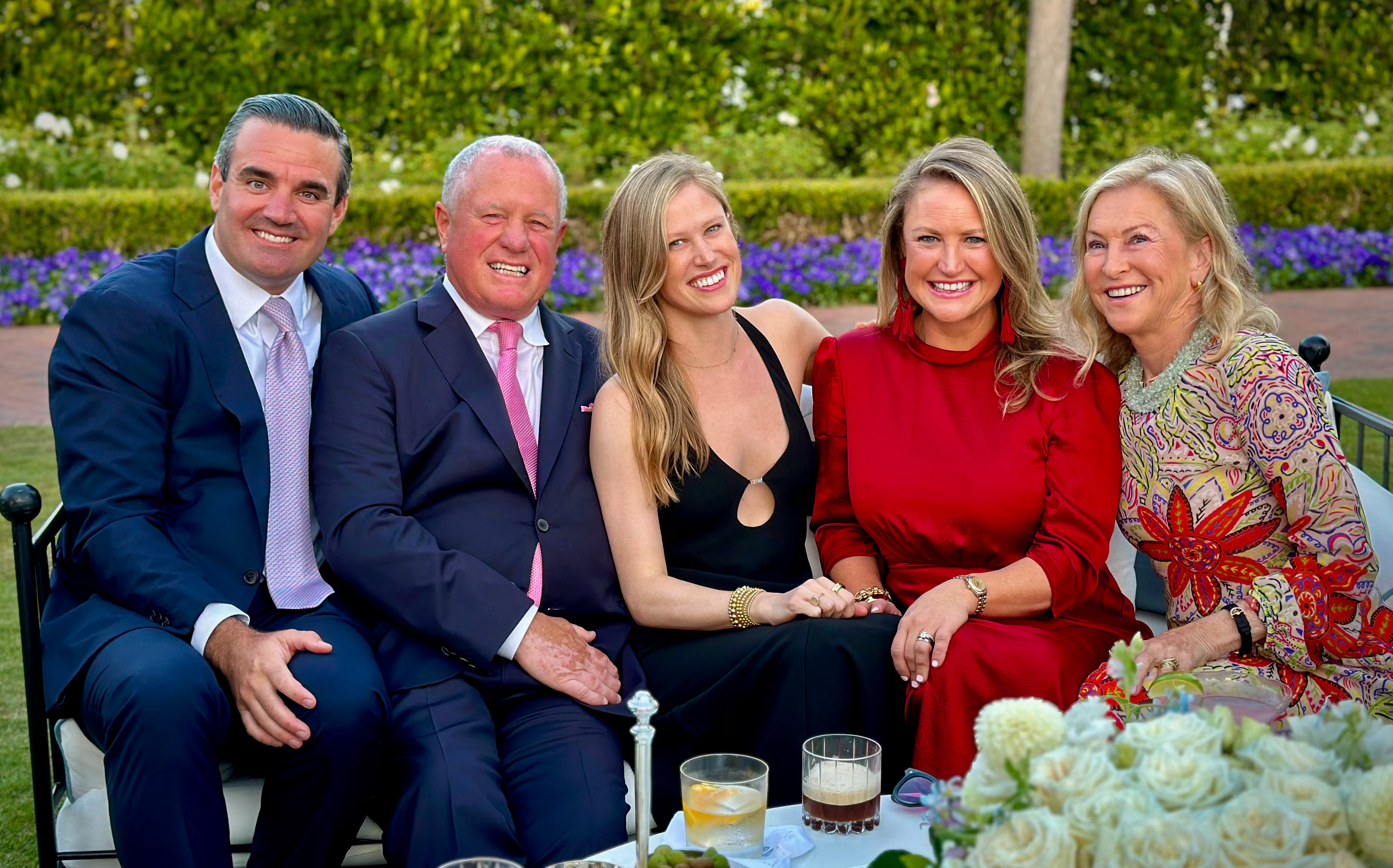
In Pacific Palisades, raising money in his own backyard, he founded Veterans Gardens, a large area in their town park that includes three bocce courts. The town recognized Dunne’s community-minded efforts in 2018 when he was named Pacific Palisades’ Citizen of the Year, in part, due to his work with the park. More than a thousand Palisadians have played in the town’s bocce leagues in the past three years.
While Dunne acknowledges seeing the destruction in his beloved community has been difficult, he’s determined not to dwell and, instead, look toward the future.
Dunne just released an original song and video, “Dream About Tomorrow,” mirroring the plight many continue to face.
“When you’re down and feeling blue
Just dream about tomorrow
Imagine all that you can do
And dream about tomorrow
Close your eyes and visualize
What do you love most in you
If you dream about tomorrow
Tomorrow may come true.”
Dunne’s friends say that he is a driving force in the rebuilding efforts and that his optimistic attitude is the glue that continues to help hold the community together.
“Jimmy is one of my dearest friends and has been for many, many years,” says renowned developer and former Los Angeles mayoral candidate Rick Caruso. “He’s incredibly creative and also a very smart person who has a big, dear heart. He’s believed by his community, his family and his friends; he’s a real community leader in the Palisades. He’s very much looked up to for his leadership and optimism, especially now, as the Palisades gets rebuilt. He is one of the kindest human beings I’ve ever met.”
“Palisadians have been blessed to have their pied piper, Jimmy Dunne — to lead them to ‘nowhere’— that happy place since the fire,” adds businessman Mark Tabit. “Each time through song, story or just a cruise on his Duffy boat, it’s that wonderful split-second to twenty minutes of nothing about the fire. We sing, talk, cry and laugh.”
Pacific Palisades’ distinct Mayberry-like charm — only with much higher mortgages — rests on a foundation of community and belonging. As the town rebuilds, Dunne is determined to ensure those qualities endure.
“I realized something with the fire. Town isn’t about a place; town is about its people,” Dunne insists. “Town is about the belonging it creates in your life.”
His voice cracking, he wipes a tear from his eyes, almost imperceptibly. When he speaks again, his voice is steadier, slower. His infectious smile returns to his face as he finishes his thought.
“Our town is alive and well. We’re coming back.”
Soon, with any luck.

0 comments on “Luck of the Irish”