
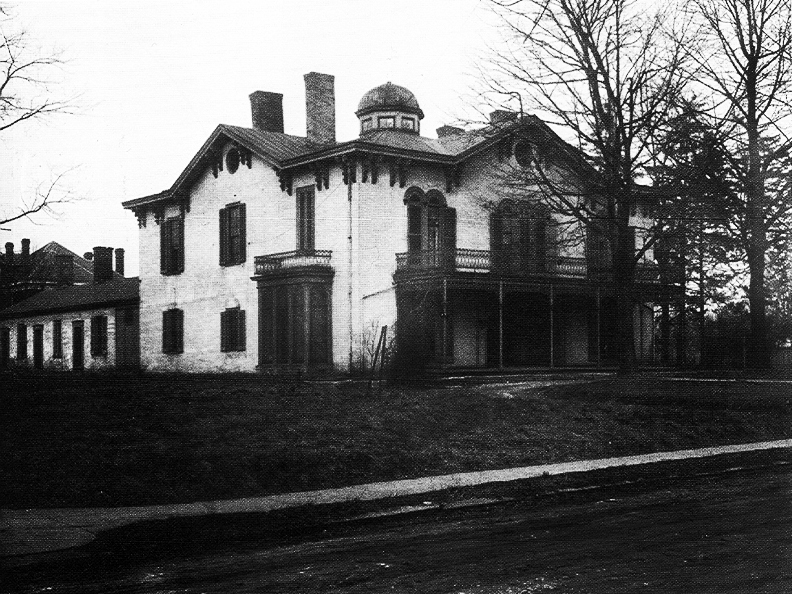
Editor’s note: The fall edition of the Kentucky Alumni Magazine included a story about historic Pope Villa, a home near campus that has served as a residence and a classroom for UK students. Some of the research of those students resulted in added information about the enslaved people who are also part of Pope Villa’s history. To read the original story visit https://www.ukalumni.net/s/kentucky-alumni-online-magazine
By Jacalyn Carfagno
Peter Still, a Black child, was kidnapped in 1807 in New Jersey, when he was 7 years old, taken to Kentucky and sold to a brick maker John Fisher. Two years later, Still began working at the brickyard where it is almost certain he helped produce some of the 100,000 or more bricks used to build the Pope Villa.
Still’s story and those of dozens of other enslaved people who worked at, lived in, or otherwise participated in the life at the Pope Villa were unearthed by students at the University of Kentucky working with Amy Murrell Taylor, a professor in the department of history at UK.
The product of their research, “Pope Villa’s History of Slavery,” as Taylor writes in the introduction, documents that “the renters and owners of the Pope Villa — every one of them — were deeply invested in urban slave markets, especially in Lexington, and continually bought, sold, mortgaged, and rented out people, generating significant wealth for themselves in the process.”
In addition to everything else the Pope Villa represents, it is also, as one student put it, “an artifact of the slave society.”
Eight students worked with Taylor in the spring of 2022, each following the strand of a specific topic or family. They scoured UK Special Collections and the Filson Historical Society in Louisville, researched property, tax and census records, wills, newspapers and other sources.
Robert Vaughan tracked the sources of Pope’s wealth, including the enslaved people he owned, acquired through marriage, and sold. He also traced the brick makers in Lexington and their reliance on slave labor, including the child Peter Still.
Jack Schwartz followed the path of William Dallam who moved into the Pope Villa in 1818. Among the enslaved people in his household was Alimond, his butler, who directed the preparations for a dinner Dallam had when President James Monroe visited in 1819, with Andrew Jackson. Dallam described Alimond “as the most valuable servant I ever had,” in his diary. But later, after Alimond escaped to Canada on one of Dallam “finest horses,” he wondered if “I had him too well educated.” Dallam does note that Alimond “took great pains to send my horse back.”
The students were able to name 19 people who were enslaved by owners or renters of Pope Villa. In addition, they identified another 76 individuals who were enslaved by owners or renters of Pope Villa, but it is not clear if they worked at the house itself.
Alimond was the exception. Taylor writes that through the research “we glimpsed one of stark realities of their lives as enslaved people: impermanence and displacement,” as people were moved involuntarily from place to place as they were sold, leased out, or became part of an estate to be dispersed.
The report begins with the names of the people the students researched. Publishing their names, Taylor wrote, because “we may not be able to reconstruct their stories in full, but we can honor their humanity by naming them as individuals.”
 News from the Blue
0 comments on “Students’ research sheds light on lives of enslaved people at Pope Villa”